Steel Strong: Why We Build with Metal—and When It’s the Right Fit
Steel buildings have been part of Mountain Construction’s story for decades. From industrial warehouses to high-traffic public venues, we’ve delivered projects where steel wasn’t just the right choice—it was the most effective way to bring our clients’ vision to life.
But steel isn’t one-size-fits-all. In this post, we’re sharing how we use different steel systems in construction, when each option makes the most sense, and how our decades of experience help clients choose the right path forward.
Two Ways to Build with Steel
At Mountain, we work with two main types of steel systems: Pre-Engineered Metal Buildings (PEMBs) and Conventional Steel—each suited to different project goals.
PEMBs use prefabricated steel components custom-designed to meet a building’s specific size, layout, and code requirements. They’re especially well-suited for industrial, warehouse, and manufacturing projects, where maximizing square footage and staying on budget are key.
One of the biggest advantages of PEMBs is efficiency. These systems rely on lighter-weight steel shapes designed to meet performance criteria without unnecessary material, which helps reduce cost and speed up erection timelines. Modern PEMBs are also a strong fit for Washington’s increasingly strict energy codes, with continuous wall insulation and enhanced roof insulation built right in.
While PEMBs have sometimes been seen as lower quality or visually limited, today’s systems tell a different story. They’re high-performing, energy-efficient, and far more flexible in both form and function than many people realize—making them a smart, economical choice for a wide range of uses.
Conventional Steel, on the other hand, uses standard steel shapes available from a variety of suppliers. It’s the system of choice for multi-story buildings, projects with complex architectural elements, or any structure that needs to support heavy use and year-round exposure. Conventional steel offers excellent design flexibility and is better suited for vertical construction or nuanced detailing that goes beyond the scope of a PEMB.
When Steel Is the Right Fit
So how do you know when steel is the right call? It comes down to how the building will be used—and what the owner wants to achieve.
For industrial, warehouse, or budget-conscious projects: PEMBs maximize usable square footage, speed up construction, and offer strong energy performance.
For multi-story buildings or projects with design complexity: Conventional steel delivers the strength and adaptability needed to bring unique visions to life.
Choosing the right system starts with understanding how the space needs to function—and that’s where our expertise shines. We work closely with clients to evaluate their options early, so they can move forward with clarity and confidence.
Two Projects, Two Steel Solutions
Furniture Bank Vancouver (PEMB): Furniture Bank Vancouver needed a single facility that could support office space, warehousing, and a small retail operation—while adhering to a tight budget. A pre‑engineered metal building allowed us to bring everything together under one roof and deliver a durable, cost‑effective solution that fit their needs.
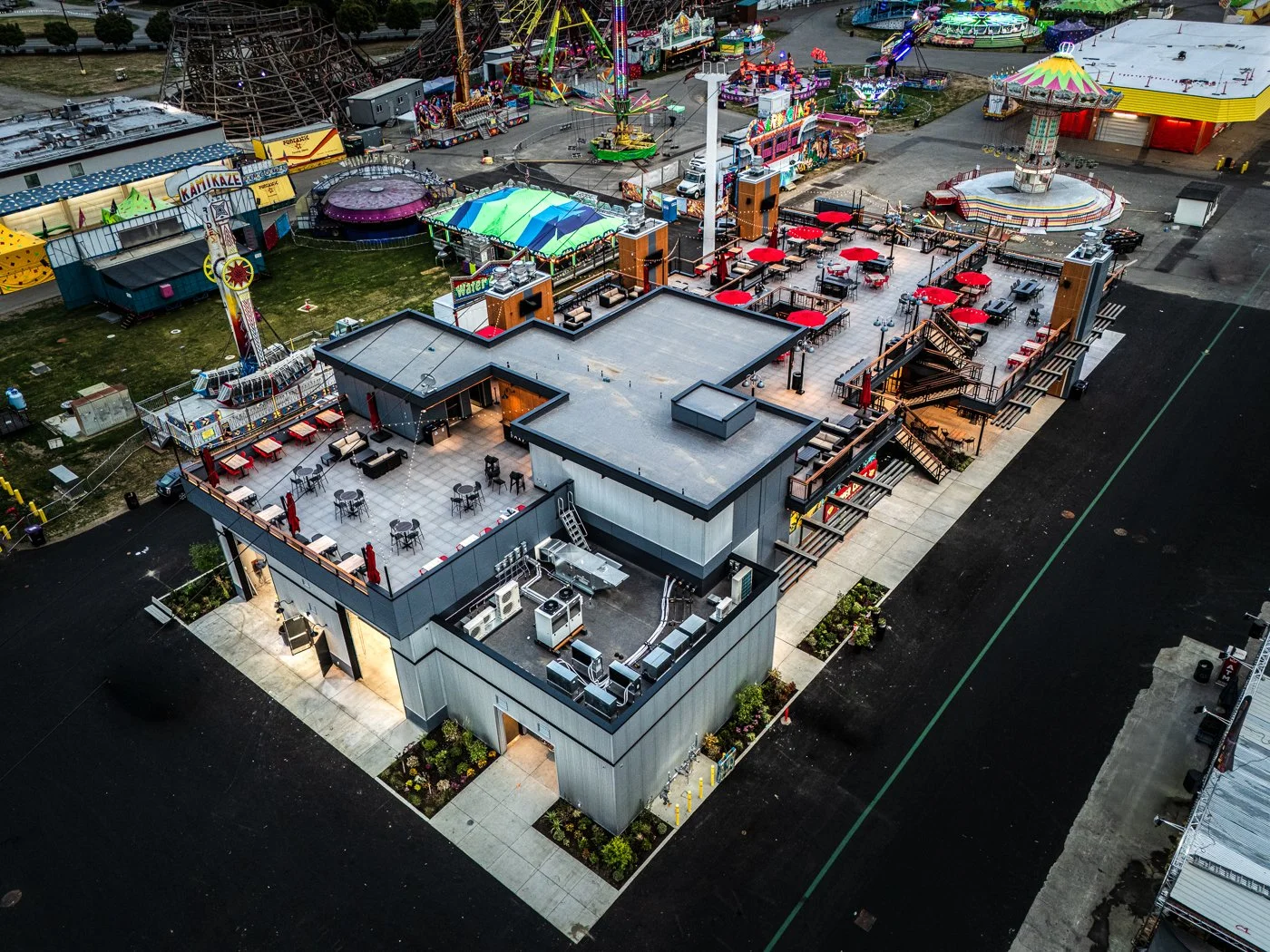
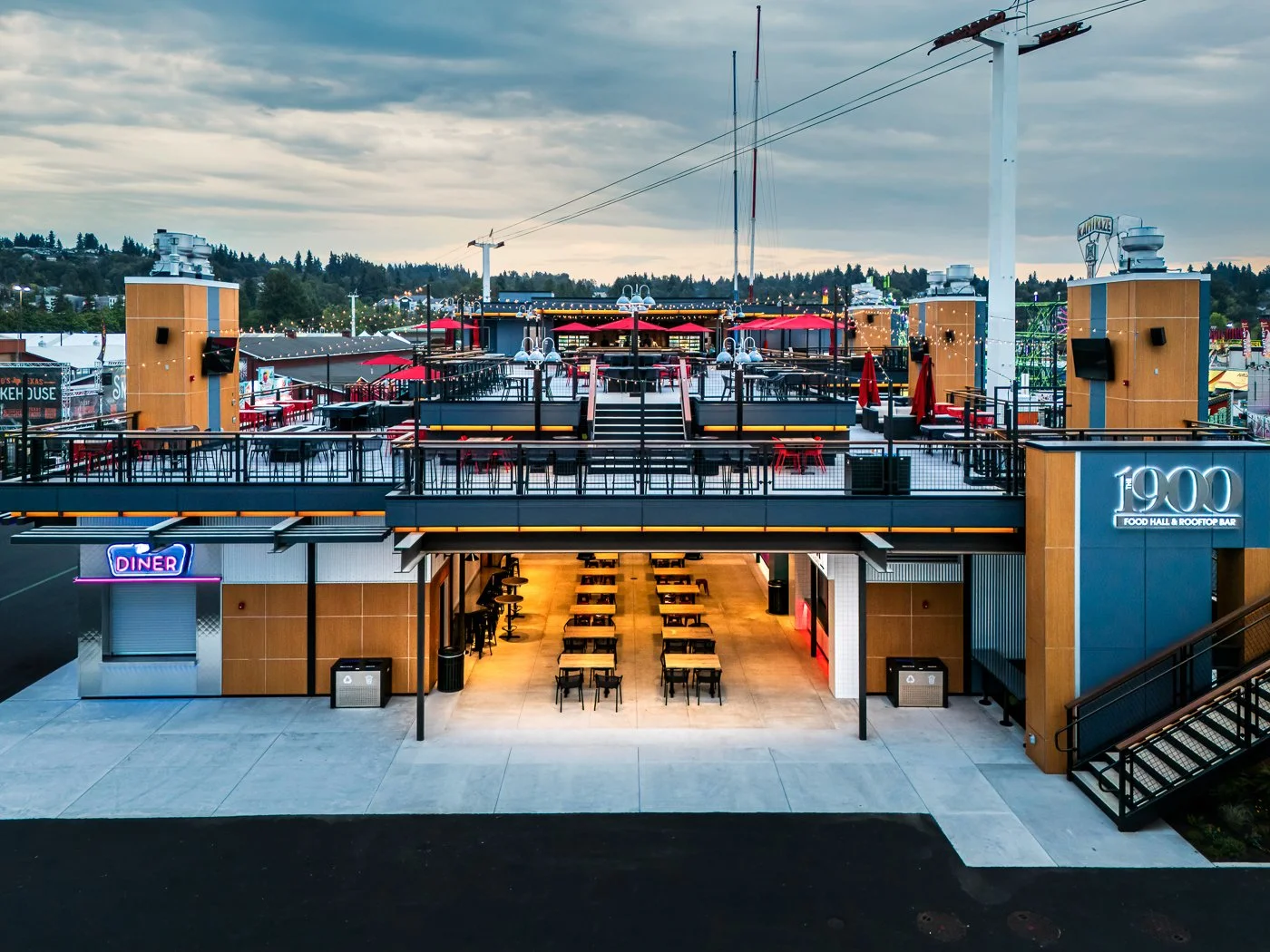
The 1900 Food Hall & Rooftop Bar (Conventional Steel): Built to commemorate the Washington State Fair’s 125th anniversary, this multi-level culinary venue was envisioned as a new landmark for fairgoers—combining chef-driven food concepts with elevated design and gathering space. Early in preconstruction, we priced wood framing as an option, but conventional steel proved more cost-effective for the structure’s demands. With complex architectural elements, seasonal foot traffic, and year-round exposure to the elements, steel offered the strength and flexibility needed to bring the project to life—supporting open-air patios, exposed structural detailing, and long-term performance.


Building With Purpose
There’s no one-size-fits-all solution when it comes to structural systems—and we don’t believe there should be. At Mountain, we work closely with owners, architects, and engineers to understand the full picture and recommend the approach that best fits the goals of the project
That might mean a PEMB. It might mean conventional framing, or even wood. What matters most is making informed decisions early—so the result is a building that performs well, ages well, and serves its people well.
When steel is the right fit, it brings real advantages—offering strength, flexibility, and long-term value. From cost-effective construction to low-maintenance performance, it helps us deliver structures that stand the test of time.
And no matter the material, our commitment stays the same: to be a trusted partner from day one—guiding every step with transparency, expertise, and care.